
How to write copy that doesn’t suck
Copy is everywhere. The button you clicked. The subject line you opened. The tagline you can still recite from an ad you saw a decade ago. Most of it washes right over you. Some of it makes you want the thing.
The difference between the two usually isn’t the budget, or talent, or a bigger idea, but a writer who remembered there was a person on the other end.
Here’s how to be that writer.
It isn’t content writing (think your 8th grade blog). And it isn’t information delivered politely. Good copy does 3 things, and they’re not optional.
It connects.
It carries a feeling.
It makes you want the thing.
If a line does none of those, it’s just text taking up space. Delete it.
[ FIRST, WHAT COPY ACTUALLY IS ]
[ FIND THE PERSON YOUR BRAND WOULD SOUND LIKE ]
Voice doesn’t arrive fully formed. You build it.
Start plain. Write what you actually mean before you try to make it clever. Once the meaning is solid, you can play. Dial the formality up or down. Reach for words outside your usual vocabulary. Then pick a real person your brand would sound like.
Your best friend. Your gym instructor. Moira from Schitt’s Creek. It doesn’t matter who, as long as it makes sense for your brand, and as long as you can hear them. Once you’ve got them, listen for their speech markers. The way they open a sentence. The words they’d never use. The rhythm they keep falling into. Then borrow it.
[ HONE IN ON YOUR TONE OF VOICE ]
If your visual identity is the clothes you’re wearing, your tone of voice is the small talk you make in them.
Here’s 5 ways a brand could say “we’re out of stock”:
This item is currently unavailable.
Gone. All of it. We're as surprised as you are.
sold out (again) (sorry) (we’re working on it)
The people have spoken. Loudly. We’ll restock soon.
You snooze, you lose. Back in two weeks.
Aesop would never say no. 5. Surreal Cereal is probably living in no. 3.
The message is the same. It’s the brand that’s talking differently.
You don’t talk to your boss the way you talk to your kid, and you’re the same person in both conversations. Your brand works the same way. The voice shifts by channel while staying recognisably itself.
Consistent, not identical. Nobody should sound silly in a pitch deck, or premium on TikTok.
[ THEN FLEX THAT VOICE ]
[ SET A RHYTHM, THEN BREAK IT ]
Copy has music. The trick is to set up a pattern, then snap it. Two beats to build it, one to break it.
“Made for late nights, early flights, and the meetings that could have been emails.”
We’d totally buy coffee beans that spoke to us like that.
The same principle covers the boring stuff. Read your copy out loud. If every sentence is the same length, it drones, and people feel that even when they can’t name it. So vary it. One long sentence that stretches out and takes its time. Then a short one. Like that.
[ DON’T TALK TO EVERYONE ]
Talking to everyone is talking to no one.
Have a point of view. Say the thing you actually believe and some people will wander off, and that’s the price of anyone else caring at all. A brand nobody dislikes is usually a brand nobody remembers
[ YOU’RE ALREADY A PERSON ]
None of this is about sounding clever. Clever fades fast, and it’s exhausting to keep up. The goal is to sound like a person. Which, conveniently, you already are.
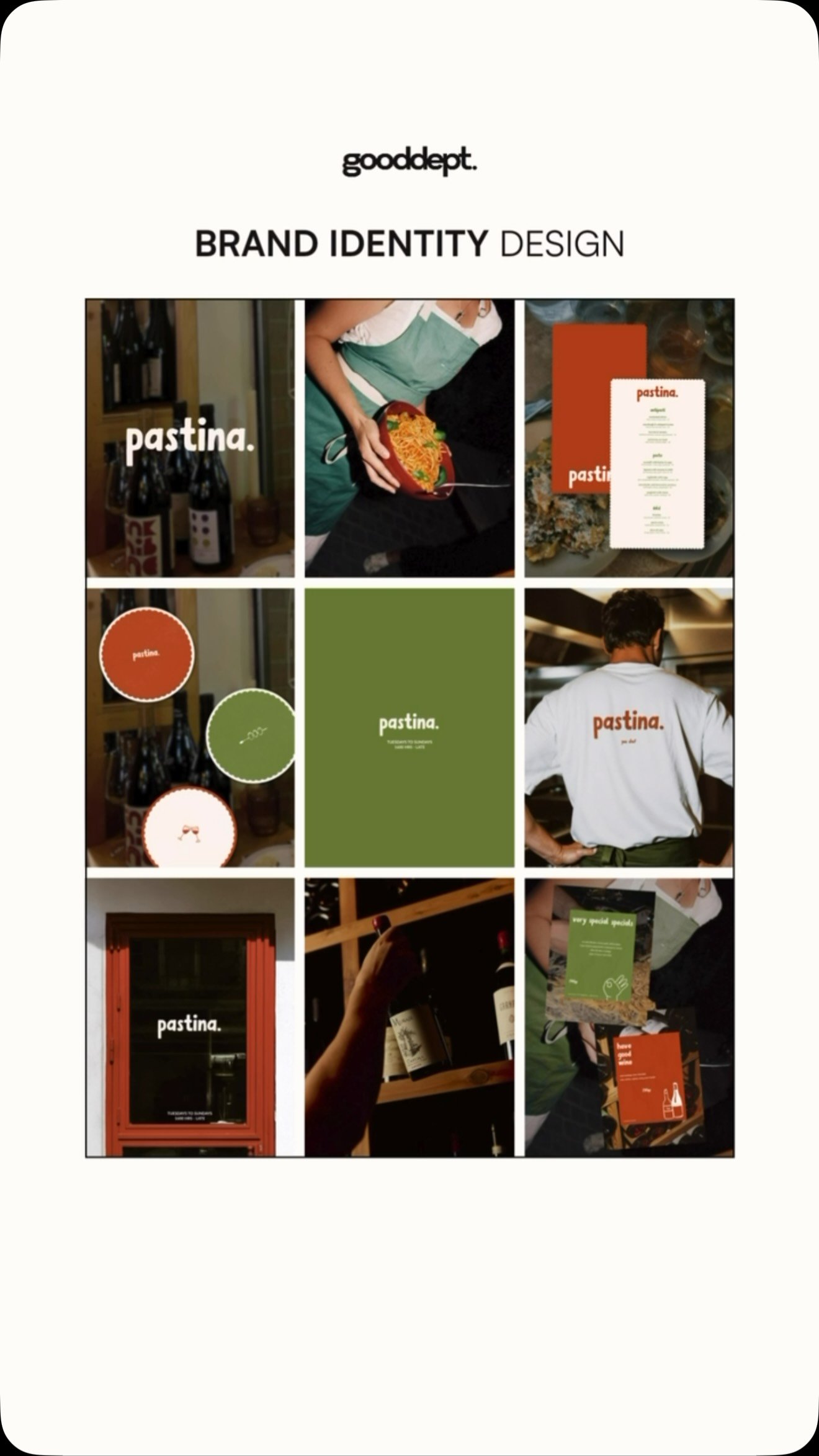
If you want a hand finding your brand’s voice, or pinning down the one it’s been low-key faking, that’s the work we do here.


Packages, pricing, that stuff.
Explore your options in our Services Guide.